Choosing between the Samsung Galaxy Watch8 and the Garmin Venu 3 means choosing between two distinct smartwatch philosophies. One leans toward a connected, app-rich ecosystem anchored in Wear OS; the other prioritizes multi-day battery life and deep wellness metrics built on Garmin's established fitness platform. This guide is designed to be a permanent reference for anyone weighing these two models, breaking down the real trade-offs so the right purchase decision becomes clear.
| Feature & Selling Point |
Samsung Galaxy Watch8 |
Garmin Venu 3 |
| Operating System |
Wear OS with One UI Watch |
Garmin proprietary OS |
| Display Type |
Super AMOLED, always-on |
AMOLED, always-on option |
| Battery Life (Smartwatch Mode) |
Up to 40 hours typical use |
Up to 14 days |
| Battery Life (GPS Mode) |
Up to 30 hours |
Up to 26 hours |
| Case Sizes Available |
40mm, 44mm |
41mm, 45mm |
| Processor |
Exynos W1000 (3nm) |
Garmin dual-core |
| Sleep Tracking Depth |
Sleep coaching, snore detection, Sleep Score |
Sleep coach with nap detection, Sleep Score |
| ECG & Blood Pressure |
ECG, BIA sensor, blood pressure (region-dependent) |
Elevated heart rate alerts, no ECG |
| Running Dynamics |
Basic running coach |
Advanced Running Dynamics, VO2 max, race predictor |
| Contactless Payment |
Samsung Wallet / Google Wallet |
Garmin Pay |
| Third-Party App Ecosystem |
Extensive Google Play library |
Garmin Connect IQ store |
| Water Resistance |
5 ATM + IP68 |
5 ATM |
| Built-in Speaker & Mic |
Yes, with Bluetooth calling |
Yes, with Bluetooth calling |
| Weight (Case Only) |
Approx. 34g (44mm) |
Approx. 47g (45mm) |
| Best Suited For |
Android users wanting deep phone integration and health sensors |
Fitness-focused users who prioritize battery life and training metrics |
The table above highlights the most decisive split between these two watches: the Galaxy Watch8 delivers a richer smartwatch ecosystem and more advanced body-composition sensing, while the Venu 3 counters with substantially longer battery life and a more sophisticated training platform. The sections that follow will help identify which trade-off fits different users best.
Battery Life and Charging: The Most Consequential Difference
The single most noticeable day-to-day difference between these two smartwatches surfaces in battery performance. According to Garmin's official specifications, the Venu 3 achieves up to 14 days in smartwatch mode and roughly 26 hours in GPS-only mode, a figure that fundamentally changes how the device fits into daily life. The Samsung Galaxy Watch8, by contrast, typically requires a charge every one to two days depending on usage intensity, a rhythm familiar to anyone who has owned a modern Wear OS device. For users who dislike nightly charging rituals, that gap is not trivial, it dictates whether the watch can reliably monitor sleep without a mid-day top-up. The Venu 3's larger case options on the 45mm variant also accommodate a physically larger battery, though the trade-off is extra weight on the wrist.
Garmin's product comparison pages reinforce that charging habit is a core marketing pillar, and independent reviewers consistently cite multi-day battery as the strongest reason to pick a Venu over a Wear OS competitor. For travel, backpacking, or simply forgetting the charger at home, the Venu 3 is more forgiving. The Galaxy Watch8 counters with faster charging speeds and a more conventional expectation for smartphone-adjacent gadgets, where a nightly routine already exists.
Health and Fitness Tracking: Depth Versus Breadth
Both watches offer comprehensive 24/7 heart rate monitoring, sleep staging, stress tracking, and SpO2 measurement, but they diverge sharply in how that data is interpreted and what sensors are available. The Garmin Venu 3 (Refurbished) Slate Stainless Black 45mm brings Garmin's Body Battery energy monitoring, advanced sleep coaching with nap detection, and a suite of training metrics including VO2 max and race predictions. These tools are built for users who want to act on their data, not just glance at it.
Samsung's approach is broader in sensor variety. The Galaxy Watch8 includes a BioActive sensor capable of ECG readings and body composition analysis in supported regions, features that Garmin does not match on this model. For users specifically interested in body fat percentage or ECG-based heart health checks, Samsung's hardware offers capabilities the Venu 3 simply does not provide. Neither approach is objectively better; they serve different priorities. A runner training for a marathon will find more actionable guidance in Garmin's ecosystem, while someone tracking metabolic health or seeking FDA-cleared ECG functionality may prefer Samsung's sensor stack.
Sleep Tracking and Recovery Insights
Sleep tracking has become a battleground feature, and both watches now offer detailed nightly reports. Garmin's sleep coach goes a step further by factoring in nap detection and providing a Morning Report that synthesizes sleep, recovery, and training readiness into a single daily snapshot. Samsung's sleep coaching delivers similar staging accuracy with snore detection and a Sleep Score, and its integration with Samsung Health creates a cohesive picture for Galaxy phone owners. Users who prioritize recovery insights over training metrics will find both satisfactory, but Garmin's edge lies in how deeply sleep data feeds into its broader training framework.
Design, Display, and Wearing Comfort
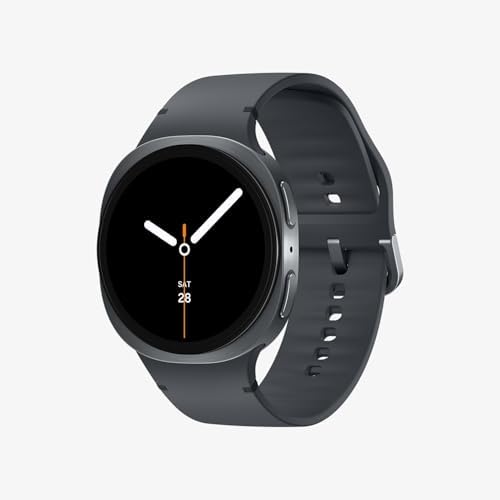
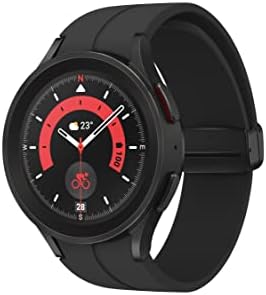
The Samsung Galaxy Watch 8 (2025) 40mm Graphite Bluetooth uses a rounded case profile that reduces perceived bulk and sits closer to the wrist. Its Super AMOLED display is bright enough for outdoor readability and supports an always-on mode without a dramatic battery penalty. The 40mm and 44mm size options make it accessible to a wide range of wrist sizes, and the graphite finish keeps it versatile for both gym and office settings.
Garmin's Venu 3 opts for a more traditional round smartwatch silhouette with a stainless steel bezel, available in 41mm and 45mm. The 45mm variant reviewed here weighs approximately 47g, noticeably heavier than the Galaxy Watch8, though the silicone band helps distribute that weight comfortably during workouts. The AMOLED panel on the Venu 3 is vibrant and supports an always-on mode, but it consumes battery more aggressively when left enabled. Buyers who prioritize a light, unobtrusive wrist feel may lean toward Samsung, while those who prefer a more substantial, sporty aesthetic often favor Garmin's build.
For a broader view of how the Watch8 fits alongside its predecessors, the Samsung smartwatch lineup outlines the range of available models and design languages. Similarly, the Garmin brand's broader smartwatch range provides context on how the Venu 3 sits within it.
Materials and Durability
Samsung employs aluminum for the Galaxy Watch8 case with a sapphire crystal display cover, while Garmin uses a stainless steel bezel with a chemically strengthened glass or optional sapphire variant. Both watches carry 5 ATM water resistance, making them suitable for swimming and showering. In terms of scratch resistance, sapphire crystal offers a clear advantage, though Garmin's sapphire options sit higher in the product stack. The Galaxy Watch8's IP68 rating adds dust protection, a spec Garmin does not always advertise but generally handles well in practice.
Smart Features and Ecosystem Integration
This is where the Galaxy Watch8 opens a substantial lead. Running Wear OS with Samsung's One UI Watch layer, the Watch8 supports a vast library of third-party apps via Google Play, including Google Maps, Spotify, and hundreds of fitness and productivity tools. Google Assistant and Bixby coexist, though Google Assistant is the more capable option. The watch pairs seamlessly with Samsung Galaxy phones for features like camera control and Find My Mobile, and works reasonably well with non-Samsung Android devices, though some features are gated to Galaxy phones. iPhone compatibility is not available.
The Venu 3 lineup runs Garmin's proprietary operating system, which means fewer third-party apps but a more stable and battery-efficient experience. It supports smart notifications, Bluetooth calling, music storage from select providers, and Garmin Pay. The trade-off is clear: Samsung offers app breadth and deeper phone integration, while Garmin offers a more focused, battery-friendly smartwatch experience without the constant app updates and background processes that drain Wear OS devices. For users who live in Google's ecosystem and want their watch to feel like a wrist-bound extension of their phone, the Galaxy Watch8 is the natural fit. For those who see smart features as secondary to fitness and battery, the Venu 3's simplicity is a feature, not a limitation.
For readers looking to explore Samsung's broader watch catalog before deciding, browsing the Galaxy Watch8 range helps clarify how the latest generation compares to earlier models in terms of features and design.
Who Should Buy the Samsung Galaxy Watch8
The Galaxy Watch8 is the stronger choice for Android users who want their smartwatch to function as a true companion device, handling calls, messages, apps, and payments with the polish of a smartphone-grade interface. It is also the better pick for anyone interested in body composition analysis, ECG readings, or blood pressure monitoring in supported regions, since these sensors are not available on the Venu 3. Users who charge their phone nightly and do not mind doing the same with their watch will find the Galaxy Watch8's ecosystem rewards that routine. It is also the more appropriate option for those who prefer a lighter, more compact case design and the flexibility of multiple app stores.
Who Should Buy the Garmin Venu 3
The Venu 3 is the clear recommendation for athletes and outdoor enthusiasts who value battery life above all else, and for users who want their wellness data interpreted through a training-focused lens rather than a general health app. With up to 14 days of smartwatch battery life, it is far better suited to sleep tracking without charging interruptions and to multi-day trips where power outlets are scarce. Sleep coaching, Body Battery, and advanced running dynamics give it an edge for anyone training with purpose. It also appeals to users who prefer a simpler, more predictable operating system that will not require frequent app maintenance and charges less often.
The Deciding Criteria for Your Purchase
Ultimately, the decision between the Samsung Galaxy Watch8 and the Garmin Venu 3 should hinge on three questions. First, how often are you willing to charge your watch? If nightly charging is acceptable, Samsung's richer feature set becomes accessible. If you want to go a week or more between charges, Garmin is the only realistic option among these two. Second, what do you want your watch to do beyond telling time? If the answer is running apps, browsing, and deep phone integration, Samsung delivers more. If the answer is tracking workouts, sleep, and recovery with actionable metrics, Garmin's platform is more mature. Third, which sensors matter to you? If ECG and body composition are important, Samsung is the stronger choice; if training readiness and energy management matter more, Garmin wins.
Both watches are excellent in their respective domains, and neither is universally superior. The right purchase is the one that aligns with your daily habits, your fitness goals, and your tolerance for charging routines. Matching those personal criteria to the specifications and selling points outlined above will lead to a decision that remains satisfying long after the initial purchase.
 Just Pick Your Favorite Stylish Watch online














Item Reviews