The Fitbit Versa 4 treats the wrist as a training instrument first, stretching a single charge across a working week, while the Google Pixel Watch 4 treats the wrist as a small phone that happens to track workouts. Placing them side by side is worthwhile because they sit near the same price tier yet answer two very different questions about what a wearable should be. This guide is written to be kept: it isolates the dimensions that genuinely change a purchase, so the decision matches daily life rather than a spec sheet.
| Feature & Selling Point |
Fitbit Versa 4 |
Google Pixel Watch 4 |
| Battery Life |
6+ days |
30 hours (41mm), 40 hours (45mm) |
| Case Size Options |
One size (roughly 40mm class) |
41mm and 45mm |
| Display Technology |
Color AMOLED touchscreen |
Actua 360 AMOLED LTPO, DCI-P3 |
| Peak Brightness |
Standard outdoor visibility |
Up to 3000 nits |
| Glass / Cover Material |
Aluminum case, glass cover |
Custom 3D Corning Gorilla Glass 5 |
| Built-in GPS |
Yes, phone-free tracking |
Yes, phone-free tracking |
| Health Sensors |
24/7 heart rate, SpO2, skin temperature, EDA |
Heart rate, fitness, sleep tracking |
| Guided Workouts |
40+ exercise modes |
Fitbit workout library |
| Readiness & Recovery |
Daily Readiness Score |
Daily Readiness Score |
| Voice Assistant |
Alexa and Google Assistant |
Gemini built in |
| Smart Replies |
Yes |
Yes |
| Charging Speed |
Magnetic charging |
Fastest charging in Pixel Watch line |
| Water Resistance |
Swim-proof |
Water resistant, swim-ready |
| OS Compatibility |
Android 12.0+ (iOS limited) |
Android smartwatch ecosystem |
| App Ecosystem Depth |
Focused Fitbit toolset |
Wear OS app library |
| Best For |
All-week wear without charging |
Full smartwatch features with fitness built in |
The single row that decides most purchases is battery life. A multi-day Versa 4 owner charges roughly once a week, while the Pixel Watch 4 follows a daily or every-other-day routine depending on the case size chosen. After that, decide on screen, chip, and the size range that fits your wrist, because those differences shape daily use far more than any logo does.
How the Fitbit Versa 4 Approaches Everyday Fitness
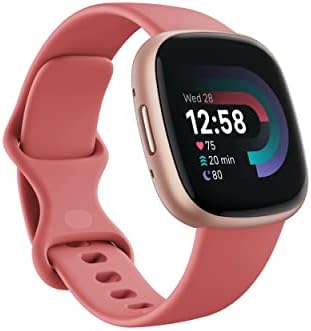
The Versa 4 was built around consistency. A wearer puts it on Monday, trains, sleeps, and takes it through the working week with the only recharge happening somewhere between Friday evening and Sunday morning. The Fitbit brand's approach to wearables has always favored endurance over spectacle, and the Versa 4 delivers a battery life of six or more days, a spec that quietly removes the biggest friction point of modern wearables.
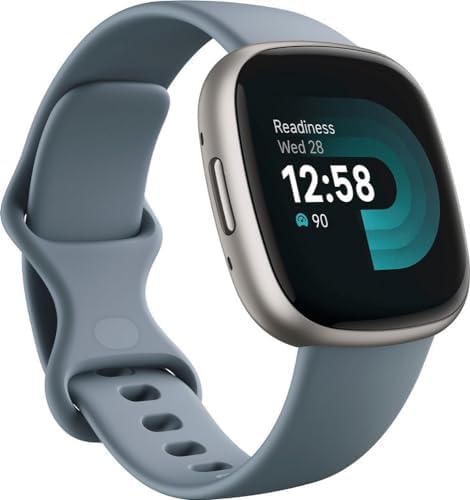
The product page positions the Versa 4 around its Daily Readiness Score, Active Zone Minutes, more than 40 exercise modes, built-in GPS, and a six-month Premium membership trial. These features place the watch firmly in the fitness-first segment rather than the general-purpose smartwatch segment.
For readers, the Fitbit name still carries weight for a specific reason: it is one of the few platforms that made sleep quality analysis, stress tracking via electrodermal activity, and recovery recommendations feel accessible to non-athletes. The Versa 4 inherits all of that in a slim casing.
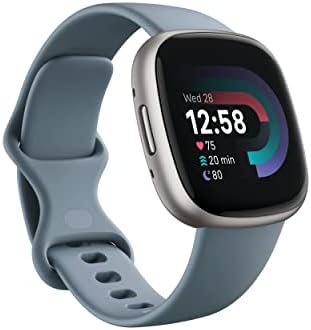
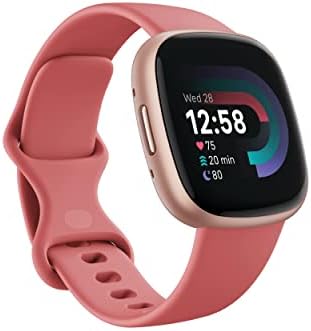
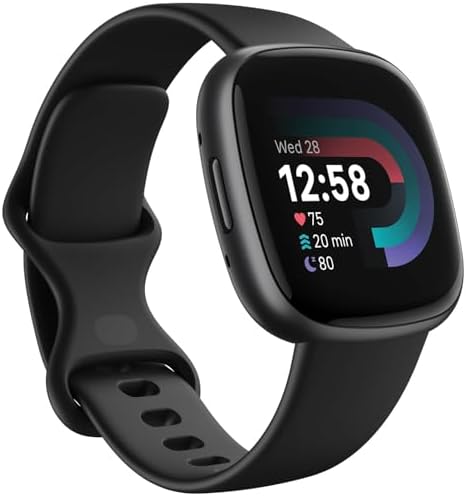
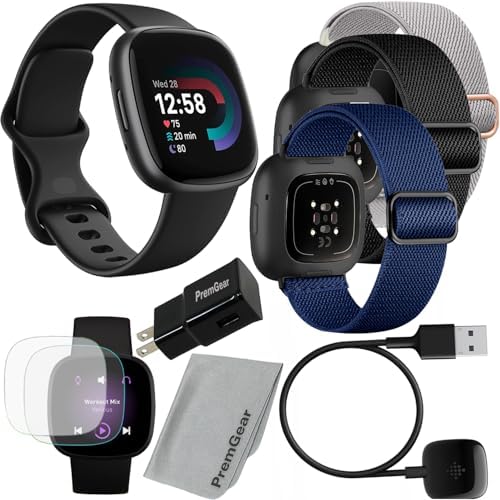
Where the Versa 4 asks for patience is in its app interface. Apps are organized around the Fitbit stack rather than a full third-party library, so the experience is more cohesive than it is expansive. For a careful look at the exact configuration used in this article, the Fitbit Versa 4 Fitness with Daily Black Graphite GPS pairs a graphite finish with both small and large bands in the box.
What the Google Pixel Watch 4 Brings to the Comparison
The Google Pixel Watch 4 arrives with an entirely different proposition. According to The Google brand's published specifications, the Pixel Watch 4 delivers 30 hours of battery on the 41mm model and up to 40 hours on the 45mm model, with a rapid top-up that restores roughly 15 hours of use from a short charge. That quick-charge capability reframes how battery life functions in daily life: less about raw days of use, more about not being stuck next to a charger for hours.
Its display specifications explore a surface far beyond what most fitness watches target. Google lists an Actua 360 AMOLED LTPO panel with DCI-P3 color, 320 ppi pixel density, and peak brightness up to 3000 nits, covered by custom 3D Corning Gorilla Glass 5. On paper, this places the Pixel Watch 4 in categories some fitness watches do not heavily emphasize, such as direct-sunlight legibility and ambient display efficiency.
Health tracking here is inherited from Fitbit rather than reinvented. Google lists heart rate, fitness tracking, and sleep tracking features, and explicitly states that the Pixel Watch 4 includes Gemini integration. The result is a device that assumes the user wants a full smartwatch, with Fitness, Health Connect, and the Pixel Watch ecosystem all operating as first-class features rather than accessories.
The two case sizes, 41mm and 45mm, matter more than they look. A 41mm case sits convincingly on smaller wrists but feels slight on a larger one, while the 45mm variant offers additional wrist presence and, per Google, more battery. The Google Pixel Watch 4 (45mm) - 45mm Wi-Fi uses the Moonstone active band and Wi-Fi connectivity, which is the configuration most fitness-minded users will want to compare against the Versa 4.
Battery Life and Charging: The Trade-Off That Defines the Category
Before anything else, buyers should decide how they want to charge. A six-day battery cadence means waking up on a random Tuesday with enough charge for another day, forgetting the last time the charger was unplugged. A 30-40 hour battery cadence means integrating charging into a routine, such as morning coffee or the first hour at a desk.
The Pixel Watch 4 counters its shorter runtime with battery capacity that compares favorably within its own product family. Google positions it as having the longest-lasting and fastest-charging battery in the Pixel Watch 4 generation. In practice, this means one concentrated charging session roughly every other day, not passive all-week endurance.
Looking across the Versa 4 collection, the throughline is endurance and ease of use rather than smartwatch breadth. Readers choosing on battery alone should decide what kind of charger sits at their bedside: a seven-day rhythm or a two-day one.
Display, Materials, and Wrist Presence
The display story is lopsided. The Versa 4 offers a bright, colorful AMOLED touchscreen that works well for workouts and notifications, but it is not where Fitbit places its emphasis. Google has been aggressively confident with the Pixel Watch 4 display, leaning on Actua 360 brightness and the Gorilla Glass 5 cover.
Reading both screen spec sheets side by side clarifies a subtle difference hard to spot in a store. Fitness-focused watches optimize for visible stats mid-workout and long battery draw cycles, while smartwatches with dominant screens balance visibility and ambient display efficiency.
- Versa 4: Color AMOLED screen, aluminum case, sport-first silhouette
- Pixel Watch 4: Actua 360 AMOLED LTPO, up to 3000 nits, custom 3D Gorilla Glass 5
- Versa 4: One case size for a clean lineup
- Pixel Watch 4: 41mm and 45mm options for different wrist sizes
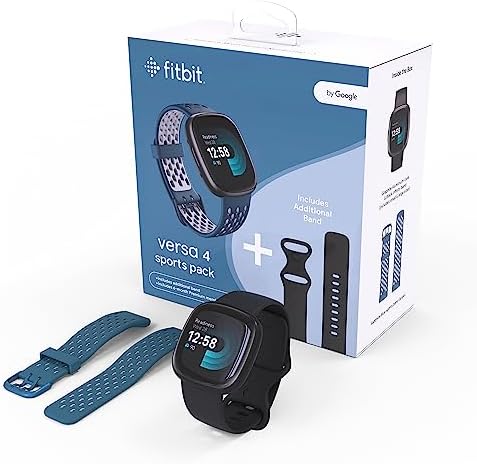
Materials and finish also matter for daily wear. The Versa 4 keeps a pair of standard bands in the box, so size adjustments come from the band rather than the case. The Pixel Watch 4, in its 45mm Wi-Fi variant, ships with an active band designed for workouts, which is the configuration most buyers should consider alongside a dressier band purchase later.
Fitness Tracking, Recovery Metrics, and Training Depth
This is where the two watch families quietly share DNA. Both use Fitbit's activity and recovery tools as their foundation: Daily Readiness Score, Active Zone Minutes, heart rate zones, sleep score, and sleep stages all trace back to the same fitness intelligence stack.
The Versa 4 leans harder on being a fitness smartwatch. It lists 40+ exercise modes, built-in GPS for phone-free runs, and 24/7 heart rate plus other health sensors, with Premium trial access to workout and wellness content that extends beyond the hardware itself. For people training three to five days a week, this is a complete and measurable setup.
The Pixel Watch 4 leans harder on being a smartwatch that also tracks fitness well. Its differentiating point is the deeper pipeline into the Pixel ecosystem, with Gemini built in for voice queries and information. Fitness tracking is fully implemented, but comes with the assumption that most wearers also want phone calls, calendar, navigation, and AI-driven assistance. Short training sessions can be timed without digging out a phone, since the built-in GPS handles a phone-free outdoor session.
For readers weighing which product actually helps them train, the real decision is whether the watch should feed structured training or just record it. The Versa 4 matches the first use case more naturally. The Pixel Watch 4 matches the second while folding in everyday smartwatch convenience at the same time.
Smart Features, Voice Assistants, and App Ecosystem
Google built the Pixel Watch 4 around the assumption that Gemini should be one step away at any moment. Gemini integration means long-form voice queries, contextual follow-ups, and AI-driven assistant features anchored to a wrist device. That is a category the Versa 4 does not compete directly on; its voice assistant options support Amazon Alexa and Google Assistant, focused on quick commands and Smart Replies rather than AI reasoning.
The app ecosystems reveal the philosophical split. The Versa 4 offers a curated set of Fitbit apps that stay consistent across devices. The Pixel Watch 4 inherits Wear OS, opening access to a broader catalog of third-party apps and deeper integrations with Pixel phones, Google Calendar, Wallet, Maps, and Gemini. For buyers who already live in the Pixel ecosystem, the Pixel Watch 4 inherits familiarity rather than adding a new interface.
On the other side, the Versa 4 provides the consistency of fewer choices: less setup, fewer compatibility questions, and a narrower scope. For readers who treat a smartwatch background as a distraction and phone notifications as the primary need, the narrower surface area makes use more straightforward.
Water Resistance, Compatibility, and Daily Practicality
Both watches handle showers, pools, and rain without hesitation. Google lists both the Versa 4 and the Pixel Watch 4 as swim-ready devices, so lap swimming and showering are part of the expected usage envelope. The difference in everyday practicality is less about water resistance and more about what happens between workouts.
Compatibility is one place where readers need to be careful. Google explicitly notes the Versa 4 runs best on Android 12.0 or newer, with limited capabilities on iOS. The Pixel Watch 4 is similarly an Android-first smartwatch. Readers on iPhones should double-check feature parity before buying, since neither device is designed to integrate cleanly with iOS.
Charging again plays a role in the fitness tracking experience. A device worn overnight for sleep tracking should have enough charge left for the morning routine. With six days between charges, the Versa 4 covers this naturally. The Pixel Watch 4 requires a short high-speed top-up somewhere in the day, which Google addresses in its battery messaging and which buyers should plan for as a 15-20 minute habit rather than a nightly ritual.
Who Should Buy the Fitbit Versa 4
The Versa 4 suits a specific kind of buyer: a runner or gym-goer who wants a smartwatch that gets out of the way, tracks accurately, tracks sleep consistently, and does not need daily attention. Its sellable characteristics include multiple-day battery life, a built-in GPS that works on its own, a slim case, and a health sensor set that covers heart rhythm patterns, skin temperature variation, and stress signals.
A second audience includes readers coming from older Fitbit devices or who have long used Fitbit accounts and want most of the same insights in a more modern case. The Versa 4 feels like the completion of a line rather than a reinvention, and that is a strength for consistent users.
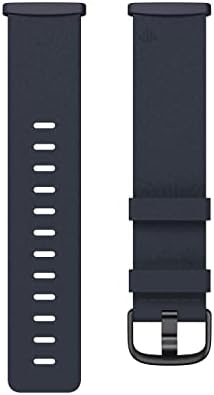
Bands are included in both S and L sizes at purchase, so there is no accessory purchase loop right after checkout. For buyers who want the device to just work as a fitness companion in the background, the Versa 4 remains one of the strongest offerings at its tier.
Who Should Buy the Google Pixel Watch 4
The Pixel Watch 4 is for the buyer who intends to use the smartwatch pieces as much as the fitness pieces. The larger 45mm case gives more information density per glance, and the display specifications allow the device to be used meaningfully under direct sunlight. For someone who uses a Pixel phone, Google Wallet, and Gemini already, the Pixel Watch 4 slots into patterns already established on the phone.
Fitness still works, of course. Google keeps Daily Readiness, sleep tracking, heart rate monitoring, and exercise logging in the stack, and ensures the devices participate fully in the Fitbit ecosystem. The bigger story is that a Pixel Watch 4 can act as a fitness watch one hour and a smartphone companion the next without flagging.
International readers and frequent travelers should also consider 41mm versus 45mm based on wrist comfort. The 45mm model answers concerns about sizing and includes the Moonstone active band and Wi-Fi connection, which is enough for daily use without a cellular plan attached.
Making the Buying Decision
The cleanest way to choose is to answer three questions. How often is charging acceptable? What does the wrist actually need to see in bright daylight? And is the watch primarily a training instrument or the top layer of a phone experience?
If charging every five to seven days matters and the watch is mainly a fitness tool, the Fitbit Versa 4 is the right buy. Its built-in GPS and multi-day endurance let it operate as a standalone fitness device without babysitting.
If the user has already invested in Android and Pixel devices, wants a bigger screen, brighter outdoor visibility, faster charging, and Gemini built in, the Google Pixel Watch 4 45mm Wi-Fi configuration is the natural pick. It remains a fitness watch underneath and simply wraps a wider smartwatch layer around a well-established health platform.
Standing aside from the specs, both devices represent a shared idea: that fitness tracking and everyday wearable features no longer have to live on separate wrists. Reading this guide once before buying should be enough to decide which way of wearing that idea suits day-to-day life across a working week and every training session it contains.
 Just Pick Your Favorite Stylish Watch online














Item Reviews