The choice between the Fitbit Versa 4 and the Apple Watch Series 11 comes down to what you value most: multi-day battery life with focused fitness tracking, or a full smartwatch platform with advanced health monitoring and deep iPhone integration. These two devices occupy different price brackets and serve different priorities, yet both aim to improve how you move, sleep, and recover. This guide breaks down every meaningful difference so you can decide which wrist companion fits your routine.
| Feature & Selling Point |
Fitbit Versa 4 |
Apple Watch Series 11 |
| Case Sizes |
One size (approx. 40mm) |
42mm and 46mm options |
| Display Type |
AMOLED, always-on not available |
Always-On Retina, wide-angle OLED |
| Battery Life |
Up to 6+ days |
Up to 24 hours |
| Health Monitoring |
24/7 heart rate, SpO2, stress, sleep stages |
ECG, hypertension notifications, sleep score |
| GPS |
Built-in GPS, connected GPS |
Built-in GPS, L1 and L5 dual-band on cellular models |
| Exercise Modes |
40+ modes |
Dozens of modes via Workout app |
| Water Resistance |
50m (5 ATM) |
50m (5 ATM), swim-proof |
| Onboard Storage |
Music control only; no onboard music |
32GB, offline music and podcasts |
| Connectivity |
Bluetooth, Wi-Fi, NFC (Fitbit Pay) |
Bluetooth, Wi-Fi, NFC (Apple Pay), optional LTE |
| Safety Features |
Limited; no fall or crash detection |
Fall detection, crash detection, Emergency SOS |
| App Ecosystem |
Limited third-party apps |
Extensive App Store with thousands of apps |
| Compatibility |
iOS and Android |
iPhone only |
| Subscription Requirement |
Fitbit Premium optional for full insights |
Most features free; no mandatory subscription |
| Typical Price Bracket |
Entry-level |
Mid-to-premium |
| Best For |
All-day fitness tracking across both platforms |
iPhone users wanting a complete smartwatch experience |
The table reveals two fundamental differences that shape every purchase decision. First, battery life: the Versa 4 stretches into the better part of a week on a single charge, while the Series 11 requires nightly charging. Second, health depth and platform capability: Apple adds hypertension notifications, ECG, emergency safety features, and a large native app store, whereas Fitbit keeps things simpler with core wellness metrics and a lighter app footprint. Neither approach is objectively better; the choice depends on which set of trade-offs matches your daily routine.
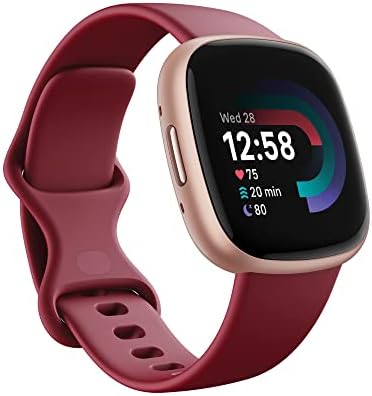
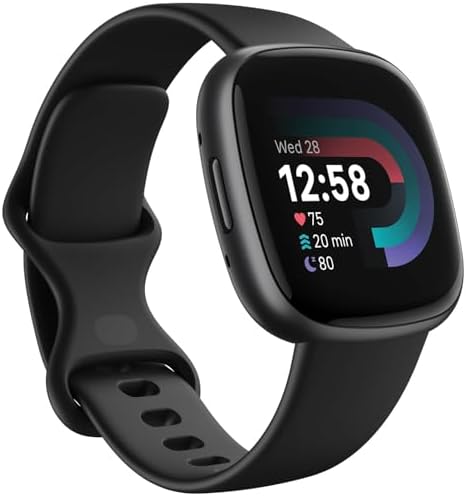
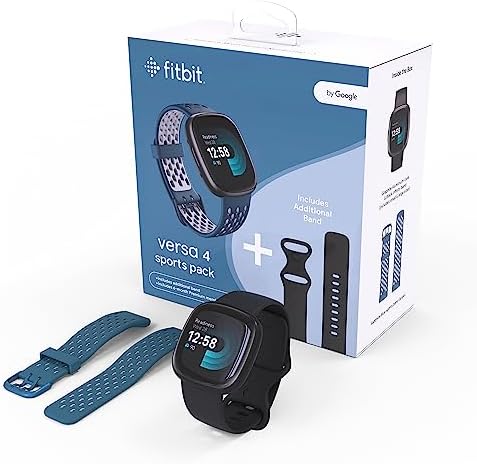
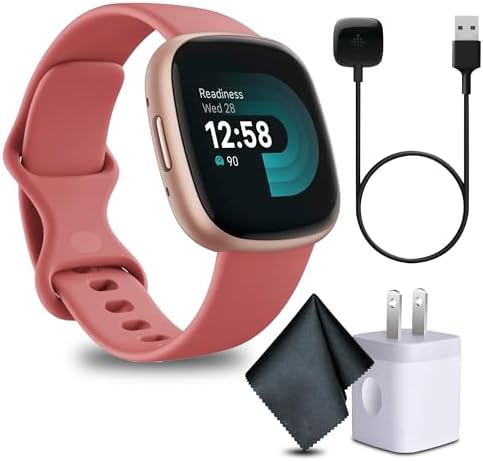
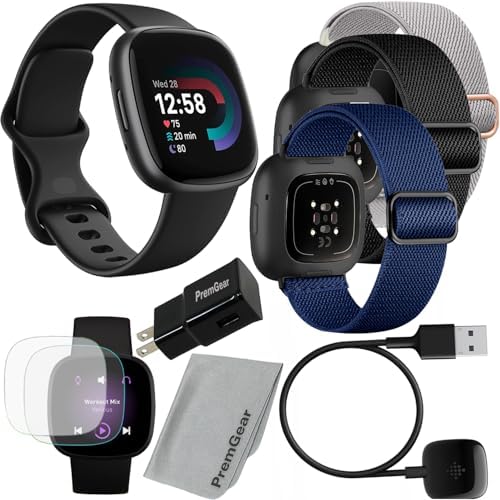
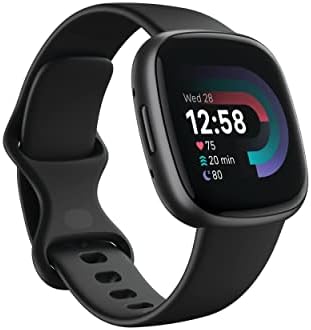
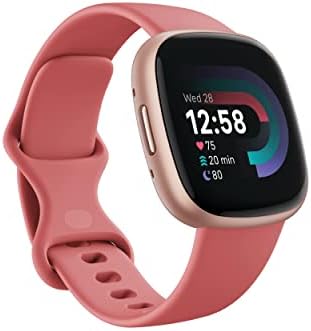
Fitbit Versa 4 Fitness Black Graphite GPS sits at the heart of Fitbit's essential health tracker philosophy. Fitbit brand's approach has always favoured streamlined interfaces and habit-building metrics over sprawling app stores, and the Versa 4 continues that lineage. Its aluminum case weighs only around 37 grams without the band, which makes it easy to forget on the wrist during sleep tracking, one reason Fitbit devices are so often recommended for overnight wear.
Sensor configuration tells the deeper story. The Versa 4 uses a multi-path optical heart rate sensor that samples continuously through the day and night, feeding data into just about every other feature: resting heart rate trends, Daily Readiness Score, stress management via EDA scanning with app assistance, and detailed sleep stages that separate light, deep, and REM cycles. The metrics here are well-documented and useful for building long-term health awareness, even if they do not match the clinical-grade ambitions of higher-end hardware. It is worth noting that many of the most detailed reports sit behind Fitbit Premium, a fact that should factor into your cost-of-ownership calculation.
On the workout side, more than 40 exercise modes cover far more territory than most casual athletes will ever require. Built-in GPS means you can leave the phone at home for outdoor runs and rides, and the connected GPS fallback keeps accuracy comparable. Swim tracking works fine thanks to the 5 ATM rating, though the Versa 4 does not carry dedicated dive certification, so it is best kept to pool lengths and open-water surface strokes rather than scuba use.
Why the Apple Watch Series 11 Costs More
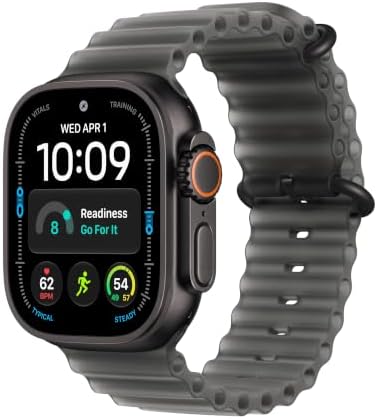
Apple Watch Series 11 [GPS 46mm] Jet Black Aluminum Black 46mm M/L GPS occupies a different category entirely. According to Apple, the Series 11 includes hypertension notifications, a sleep score feature that rates nightly rest on a simple scale, and Workout Buddy, a voice-powered coaching assistant driven by Apple Intelligence. Those are not incremental spec bumps; they represent Apple's push to make the Watch a proactive health companion rather than a passive data collector.
The hardware reflects that ambition. The wide-angle OLED display is significantly brighter than previous generations, remaining legible even in direct midday sun, while the Always-On capability means you can glance at metrics without raising your wrist. The Jet Black aluminum finish in the 46mm size gives the case a sleek, unified look that pairs well with both sport bands and formal leather options.
Health Features That Go Beyond Fitness
The ECG app lets users take a single-lead electrocardiogram record in about 30 seconds, a feature with genuine clinical utility for adults monitoring heart rhythm irregularities. Hypertension notifications complement that by alerting users to potential elevated blood pressure patterns over time, not a diagnosis, but useful signal for conversations with a physician. Fall detection and crash detection further broaden the safety net, automatically contacting emergency services when the wearer becomes unresponsive after a hard fall or vehicle collision. These are features you hope never to use, but they meaningfully change the value equation for older adults, solo athletes, and anyone living alone.
App Ecosystem and iPhone Integration
Because the Series 11 collection lives inside the iPhone ecosystem, notifications, calls, messages, Apple Pay, and third-party apps run with far deeper integration than any cross-platform wearable can achieve. The built-in App Store means you can install Strava, Spotify, and hundreds of specialized training apps directly onto the wrist. Offline music and podcast storage is standard, which the Versa 4 simply cannot match. The trade-off is real, though: the Series 11 works only with iPhones, while Versa 4 series works with both iOS and Android.
Battery Life: The Single Biggest Lifestyle Split
Apple states that the Apple Watch Series 11 delivers up to 24 hours of battery life in typical use. That means charging it every night or every other night, usually during a fixed routine, while showering, while reading before bed, or on a dedicated charging puck on the nightstand. For sleep-tracking users, charging before bed and wearing the watch overnight has become a common practice, though it places the device in a permanent cycle of being topped up.
The Versa 4's roughly six-day runtime changes how the device fits into daily life. You can wear it continuously for a full working week, track every night of sleep without interruption, and only think about charging on the weekend. GPS-heavy workouts and Always-On modes trim that number, but even heavy use tends to last several days. For anyone who travels frequently, forgets chargers, or simply does not want another daily device to manage, that gap is decisive.
Fitness Tracking Depth: 40+ Modes vs Apple's Workout App
Fitbit's 40-plus exercise modes cover a remarkably wide range of activities, from running and cycling to martial arts, dance, and specific gym-machine categories. Auto-exercise recognition catches many of these without any manual input. The Versa 4's training feedback focuses on long-term trends: Activity Zone Minutes, resting heart rate trends, and the Daily Readiness Score that suggests whether you should push hard or recover. It is a habit-first approach aimed at consistency rather than peak-performance analytics.
Apple's Workout app has a leaner default list but compensates with deep third-party integrations. Serious cyclists add power meters, runners layer on interval apps, and swimmers get detailed stroke analysis, all through the App Store. The Series 11's dual-band GPS on cellular models also improves urban accuracy significantly, locking onto signals cleanly between high-rise buildings where single-band receivers struggle. For precision-focused athletes in dense cities, that alone can justify the upgrade.
Which Watch Should You Actually Buy?
If you are on an iPhone, want advanced health features like ECG and hypertension alerts, value a bright Always-On display and an extensive app ecosystem, and do not mind charging nightly, Apple Watch Series 11 is the more capable device. Its safety suite, fall detection, crash detection, Emergency SOS, adds a layer of reassurance that most rivals do not attempt.
If you prioritize battery life above everything else, use Android, or want a clean fitness-focused interface without the complexity of a full app platform, the Fitbit Versa 4 remains one of the most practical options in its class. Reasonable pricing, multi-day battery, and 40-plus exercise modes make it a smart pick for consistent, visible progress.
For some buyers, a two-device routine works best: the Series 11 for daily notifications and safety, the Versa 4 for sleep and multi-day tracking. Whichever path you choose, matching the device to your sleep habits, phone platform, and willingness to charge is what ultimately determines satisfaction, far more than any single specification on a comparison chart.
 Just Pick Your Favorite Stylish Watch online














Item Reviews