The Apple Watch lineup has settled into a clear two-tier structure: the flagship Series 11 at the top and the value-focused SE 3 below it. Both run watchOS and share the same core fitness and safety architecture, yet they diverge sharply on display technology, case materials, health sensors, and charging speed. This guide is built to be a permanent reference for that decision, a shopping companion worth saving rather than a spec dump. The Series 11 and the Apple Watch SE 3 collection are compared here on the dimensions that actually change what you buy: screen brightness, case options, sensor suite, battery figures, and the price gap that separates them.
| Feature and Decision Factor |
Apple Watch Series 11 |
Apple Watch SE 3 |
| Case Sizes |
42mm and 46mm |
40mm and 44mm |
| Case Materials |
Aluminum and titanium |
Aluminum only |
| Peak Display Brightness |
Up to 2000 nits |
Standard Always-On Retina |
| Display Area (largest case) |
Larger 46mm canvas |
977 sq mm at 44mm |
| Resolution (largest case) |
Higher pixel density |
368 by 448 pixels |
| Case Depth |
Slimmer chassis |
10.7mm |
| Weight (GPS, largest case) |
Heavier due to larger shell |
32.9 grams at 44mm |
| Chip |
Newest S-series SiP |
Current S-series SiP |
| Health Sensors |
ECG, blood oxygen, temperature |
Heart rate and sleep tracking |
| Charging Speed |
Fast charging |
Standard charging |
| Water Resistance |
50m, swimproof |
50m, swimproof |
| Connectivity |
GPS and Cellular options |
GPS and Cellular options |
| Safety Features |
Crash Detection, Fall Detection, SOS |
Crash Detection, Fall Detection, SOS |
| iPhone Requirement |
iPhone 11 or later, iOS 26 or later |
iPhone 11 or later, iOS 26 or later |
| Best Suited For |
Health-focused users, outdoor readability |
First-time buyers, budget-conscious upgraders |
The table reveals where the two models genuinely part ways. The most consequential rows are the health sensor suite and display brightness: the Series 11 carries ECG and blood oxygen monitoring that the SE 3 does not, and its 2000-nit panel is built for direct sun. The SE 3 counters with a lighter 44mm frame at 32.9 grams and the same safety architecture, which matters more to casual users than advanced diagnostics.
Display and Case: Brightness Versus Compactness
According to Apple, the Series 11 ships with an Always-On Retina display rated at up to 2000 nits, which puts it among the brightest screens the company has fitted to a standard Apple Watch. That figure is not marketing gloss; it is a measurable output that determines whether glancing at a notification mid-hike or under midday sun requires a shielding hand. The 42mm and 46mm case sizes also give the Series 11 a broader canvas than before, and the titanium option adds a material tier the SE line has never offered.
The SE 3 approaches the same problem from the opposite direction. Apple lists its 44mm model at 38mm wide, 10.7mm deep, and 32.9 grams in GPS trim, with a 368 by 448 pixel panel covering 977 square millimeters. Those numbers describe a watch designed to disappear on the wrist, light enough for sleep tracking and compact enough for narrower arms. The Always-On Retina display is retained, so the SE 3 does not force a raise-to-wake compromise, but it lacks the Series 11's peak brightness headroom.
The practical trade-off is straightforward. Anyone who spends hours outdoors, cycles in bright light, or simply prefers a larger dial will feel the Series 11's advantages immediately. Anyone upgrading from an older 40mm or 41mm Apple Watch, or buying for a smaller wrist, will find the SE 3's proportions more familiar. The titanium finish on the Series 11 also changes the ownership experience, resisting scuffs differently from aluminum and shifting the watch toward a jewelry register that the SE 3 does not attempt.
Health Sensors: The Real Dividing Line
The sensor gap is the clearest reason to spend more. Apple positions the Series 11 with a full diagnostic suite that includes ECG and blood oxygen measurement alongside temperature sensing, while the SE 3 concentrates on heart rate monitoring and sleep tracking. For a runner logging training load, the difference is marginal. For someone with a family history of arrhythmia, the ECG function alone can justify the upgrade, turning a fitness gadget into a screening tool even if it never replaces a clinical visit.
The SE 3 is not stripped of substance, though. Apple gives it the same Crash Detection, Fall Detection, and Emergency SOS stack found across the current lineup, plus the full fitness and sleep tracking experience that made the SE line popular in the first place. The company markets the SE 3 as offering powerful health, fitness, connectivity, and safety features at a value price, and that positioning holds up: for a teenager's first watch or a parent who mainly wants activity rings and fall alerts, the missing sensors rarely register in daily use.
Buyers should think in terms of scenario rather than specification. If the watch will be worn during high-intensity training, sleep, and recovery tracking, the Series 11's temperature and blood oxygen data add context to that picture. If it will be worn mainly for step counts, notifications, and peace of mind, the SE 3 covers the essentials without asking for a premium.
Performance, Battery, and Charging Habits
Both watches run the current watchOS generation, and Apple lists the same software floor for each: an iPhone 11 or later running iOS 26 or later. That parity matters because it means the SE 3 will not be left behind on core software features simply because it costs less. The Series 11 carries the newest S-series system-in-package, which shows up in smoother animations and faster on-device processing for health algorithms, but day-to-day responsiveness across the two is closer than the price gap suggests.
Charging speed is where the flagship quietly pulls ahead. The Series 11 supports fast charging, which shortens the top-up window and makes a quick shower-time charge genuinely useful. The SE 3 relies on standard charging, so the routine becomes an overnight habit rather than a fragmented one. Neither watch promises multi-day endurance, and neither is positioned as a rugged expedition tool; that role belongs to the Ultra line.
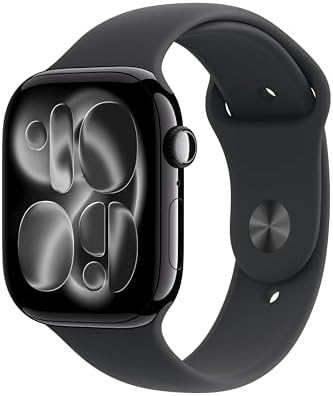
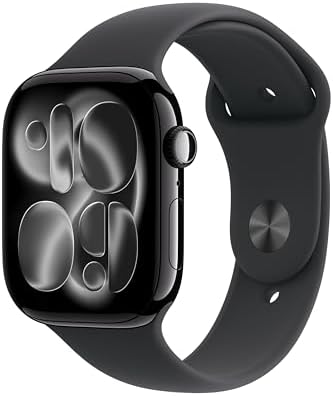
For anyone accustomed to charging a phone every night, the distinction is minor. For shift workers, frequent travelers, or people who track sleep and forget to plug in, the Series 11's faster refill is the sort of detail that quietly improves ownership. The Apple Watch Series 11 [GPS 46mm] Jet Black Aluminum represents the flagship formula at its fullest: the largest case, the newest silicon, and the full sensor array in one package.
Who Should Buy the Series 11
The Series 11 justifies its premium for three buyer profiles. The first is the health-conscious user who wants ECG and blood oxygen data as part of a broader wellness routine. The second is the outdoor user who needs a display that stays legible at 2000 nits and a case large enough to read at a glance. The third is the buyer who keeps a watch for four or five years and prefers to start at the top of the lineup rather than upgrade mid-cycle. Apple's specification pages confirm the Series 11 requires an iPhone 11 or later with iOS 26 or later, and the titanium case option gives that long-hold buyer a more durable finish.
This is also the model to choose if the watch will double as a style object. The 42mm and 46mm aluminum and titanium cases sit in a different visual register from the SE 3's aluminum-only shells, and the larger display makes watch faces and complications feel less cramped. Buyers who have previously owned a 45mm or 46mm watch will notice the continuity immediately.
Who Should Buy the SE 3
The SE 3 is the smarter purchase for a first Apple Watch, a gift, or a secondary device for someone who already owns a mechanical watch. At 32.9 grams in the 44mm GPS version, it is light enough to wear overnight without irritation, and the 40mm option suits smaller wrists without forcing a compromise on features. The Always-On Retina display means notifications remain visible without a wrist raise, and the safety stack, including Crash Detection, Fall Detection, and Emergency SOS, is identical to the flagship's.
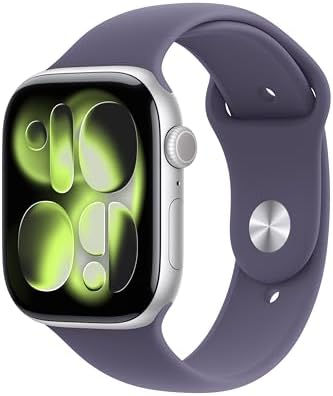
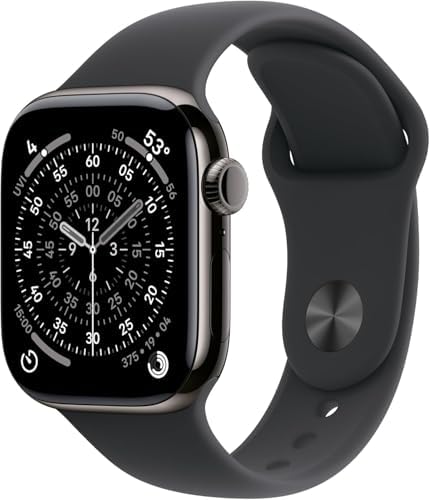
It is also the pragmatic choice for households buying more than one watch. Two SE 3 units still cost less than a single high-spec Series 11 in many configurations, and the core experience of activity rings, sleep tracking, and iPhone integration is preserved. The Apple Watch SE 3 [GPS 40mm] Midnight Aluminum is the clearest expression of that value case: the smaller case, the essential sensors, and the same software foundation.
The one caveat is longevity of ambition. If the buyer later develops an interest in serious training metrics, sleep apnea-style screening, or advanced health monitoring, the SE 3 will feel like a stepping stone. That is not a flaw in the product; it is a reason to be honest about intended use before purchase.
Design Language and Finishing Details
The Series 11 continues Apple's gradual move toward a flatter, more jewel-like case profile, and the titanium option in particular reads as a deliberate step upmarket. The aluminum versions remain the volume sellers, offered in finishes that pair well with the Sport Band and Sport Loop families. The larger 46mm case changes wrist presence noticeably; on smaller arms it can overwhelm, so trying both sizes in person remains the most reliable way to decide.
The SE 3 keeps a softer, more approachable geometry. Its 10.7mm depth and rounded edges make it comfortable against the wrist during sleep and exercise, and the aluminum-only construction keeps weight down. The two finishes Apple offers are neutral and easy to match, which is part of why the SE line has become the default recommendation for new smartwatch buyers. Neither watch is a fashion statement in the way a mechanical chronograph might be, but the Series 11's materials give it a longer visual shelf life.
Making the Final Decision
The decision hinges on two questions: does the buyer need ECG and blood oxygen data, and how much does peak display brightness matter? A yes to either points to the Series 11. A no to both, paired with a preference for a lighter and smaller watch, points to the SE 3. Everything else, including safety features, water resistance, cellular options, and iPhone compatibility, is shared, which makes this one of the cleaner upgrade decisions in the current wearable market.
It helps to think of the Apple brand's approach as a ladder rather than a single product. The SE 3 is the entry rung built for accessibility and first-time ownership; the Series 11 is the rung where diagnostics, brightness, and materials converge. Both are current, both run the same software, and both carry the same safety net. The right choice depends less on budget alone and more on how the watch will actually be used, a question worth answering before the box is opened and a standard worth returning to whenever the next upgrade cycle arrives.
 Just Pick Your Favorite Stylish Watch online














Item Reviews